Repetition of tasks is one of the major issues when dealing with artificial intelligent. A AI assistant might provide an amazing answer in a single moment but then lose crucial context in the following interaction. The developers will make up for this by sharing the same information, files, or documents to keep a conversation productive.
This strategy is getting less effective as AI is more widespread in software. Intelligent systems require the capability to keep relevant information in mind and retrieve it quickly, and understand how information evolves as time passes. Memory is one of the most critical elements of AI architecture today.
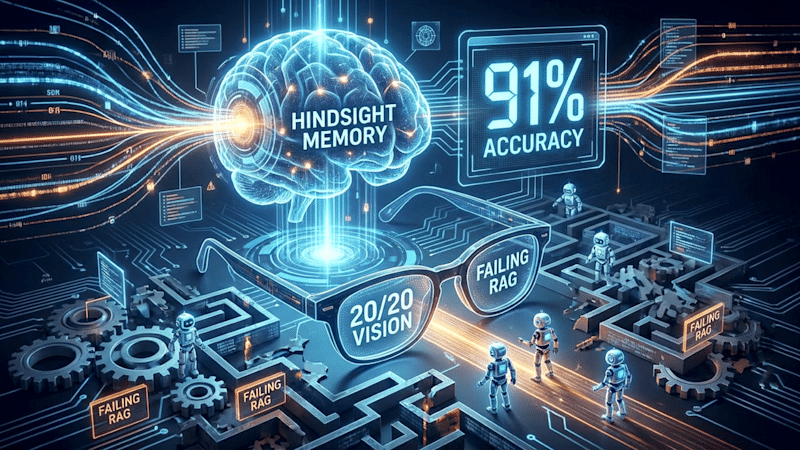
Memory turns AI from being reactive to intelligent
An AI system that keeps track of the previous work is very different when compared to one that begins all over again. Persistent memory allows programs to detect patterns and comprehend ongoing projects. They can also provide answers that are based on the historical context, not individual prompts.
Telys was designed to address this problem. Instead of functioning as a cloud service, it acts as an integrated AI agent memory engine that stores and retrieves data directly within the application. This allows developers to effectively maintain context while also reducing the need for redundant computations and processing. This leads to an AI experience which is more natural because the software remembers important information.
Localizing data improves speed and security
The speed at which an AI model generates text is no longer the only way to measure performance. The speed of retrieval, ability to respond to systems, as well as the security level are all equally important for companies that implement AI in their production.
Using on-device memory for AI agents allows applications to retrieve relevant information without depending on constant communication with external servers. Because memory is kept within the local environment for AI agents, queries can be executed more quickly, while also allowing organisations to exercise greater control over sensitive data. This is especially beneficial for teams of engineers developing internal software, enterprise applications, and privacy-sensitive software where data ownership cannot be compromised.
Developers benefit from memory that functions in the background
Intelligent software shouldn’t need managing complex infrastructure just to store the context. Software developers are increasingly looking for tools that integrate naturally into existing workflows without introducing extra operational costs.
A local MCP Memory Server allows this to be done by providing compatible AI Development Environments to access memory in the local ecosystem. Instead of having to transfer information through remote APIs AI assistants can get exactly the information they require from a memory layer already connected to the application. This streamlined approach reduces delay while providing a smoother development experience for teams who are working on big projects with ever-changing codebases, documentation and documentation.
AI’s future is built on context
Artificial intelligence is moving beyond simple conversations to long-running systems capable of planning, thinking and performing complex tasks on its own. These systems need more than just powerful language models they need reliable memory that is able to store information across every interaction.
Telys is an advanced AI memory engine, providing persistent local search that has been specifically developed for applications that need speed along with security, reliability and. Telys combines the on-device AI memory agent with a high performance local MCP memory service to assist developers develop software that can remember previous work, retrieves data instantaneously and is improved over the period of time.
Ability to think clear and precise will become more valuable as AI integrates more deeply into business operations. Telys’ AI application development tool aids developers to build AI applications with more speed along with intelligence and efficiency at work by providing intelligent systems a permanent context instead of a brief conversation.